Skip to content
Research & Data

Asset Mapping for Digital Inclusion

Engaging and building upon resources to develop community-led solutions

What Is Asset Mapping?

Asset mapping is an approach to planning and community development centered on identifying and building on a community’s existing resources.

Deep community engagement is a key part of asset mapping, used to uncover existing strengths, skills, and connections that can be leveraged.

As an approach to data collection and documenting the current state of digital equity, asset mapping is inherently solution-oriented. This makes it a valuable counterbalance to more traditional assessments of needs and existing conditions, which tend to emphasize the deficiencies and barriers to digital equity that a community faces. While quantifying needs is an important step in the planning process, solely focusing on challenges tends to disregard the aspirations and strengths of community members. Rooted in the concepts of Asset Based Community Development, asset mapping recognizes that, with the necessary resources and structural support, communities possess the knowledge and skills to develop solutions from within.

Asset Mapping and
Digital Inclusion

While asset mapping can apply to most planning processes, there are some characteristics of digital inclusion work that make it an especially well-suited approach for our field:

  • RESOURCE DEVELOPMENT: The information gathered through asset mapping can be used to create public-facing tools, such as a digital inclusion program directory, that help people find the support services they need. For examples, check out See It in Action below.
  • ECOSYSTEM MAPPING: It helps to see the relationships between an interconnected network of digital inclusion organizations and resources.
  • CAPACITY-BUILDING: It helps identify opportunities to scale existing programs and find gaps in the ecosystem where there is a need to develop new assets.
  • BROADEN THE TENT: It can help organizations that don’t consider their work to be explicitly digital inclusion-related to understand their own connections to digital inclusion.

Asset Mapping Best Practices

Digital equity organizations, such as nonprofit device refurbishers, digital inclusion coalitions, and community technology centers

Organizations running digital inclusion programs, such as public libraries, senior centers, and community centers

Organizations serving priority populations, such as public housing authorities, returning citizen programs, and university agricultural extension programs

Other community assets, such as anchor institutions, ISPs, gathering spaces, and policymakers

Determine who is best suited to contribute which asset information.

  • Local or regional government staff
  • Existing coalitions, associations, and partners
  • Anchor institutions
  • State digital equity and broadband office staff

Consider what level of detail is needed for different types of assets. 

  • Establish standard fields and values, especially if many organizations will contribute asset data.
  • Define what information is required and what is optional.
  • Provide templates or a centralized data input tool to ensure uniformity of data and the ability to aggregate from multiple sources.
Free, Easy-to-Use Asset Mapping Tools

Below, our Asset Inventory Template is available as a Google Sheet and as an Excel (.xlsm) file. Our Survey Template is also available as a Google Form.

You will find a full explanation of each field in the “Data Dictionary” sheet on the Asset Mapping Inventory Template. Once you have an understanding of what each field is for, feel free to edit, delete, or create fields as you need. These tools are fully customizable. No changes you make will affect the original version, so please make them your own!

You are free to use, replicate, and alter materials, we just ask that you credit NDIA when sharing.

Asset Mapping Webinar

This webinar walks through how the asset mapping process can be applied to digital inclusion.


It features an introduction to asset mapping, best practices, examples from communities who have done asset mapping, and a walk-through of NDIA’s asset mapping resources.


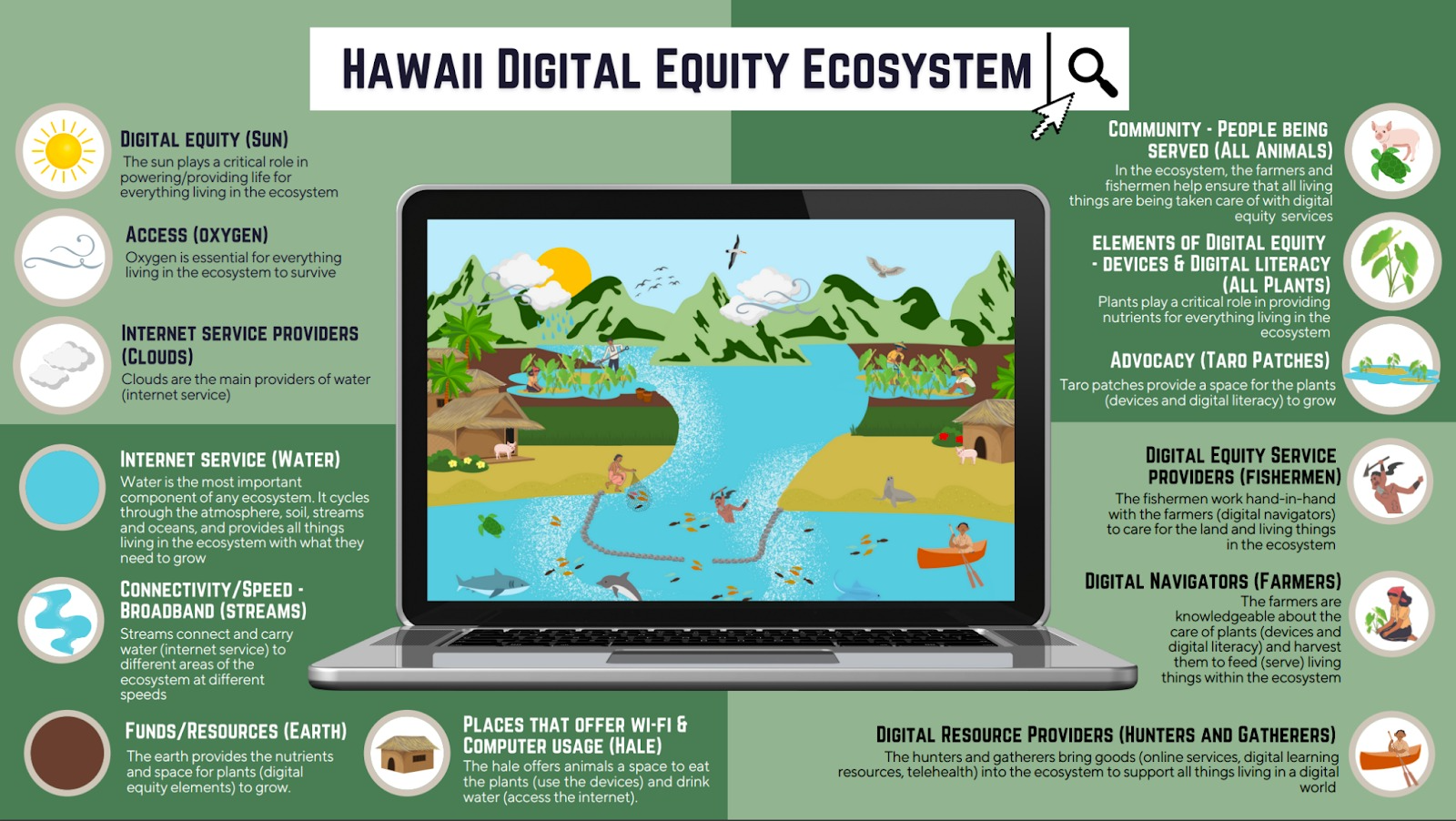
In 2021, the State of Hawaii Broadband and Digital Equity Office undertook an asset mapping project to understand the state’s digital equity ecosystem—both as it exists now and how it could ideally look. Their process involved significant engagement and input from digital inclusion practitioners across the state. The results are a simple online Digital Equity Resource Directory as well as several elegant visualizations relating the digital equity ecosystem to elements of the natural ecosystem and traditional Hawaiian culture.

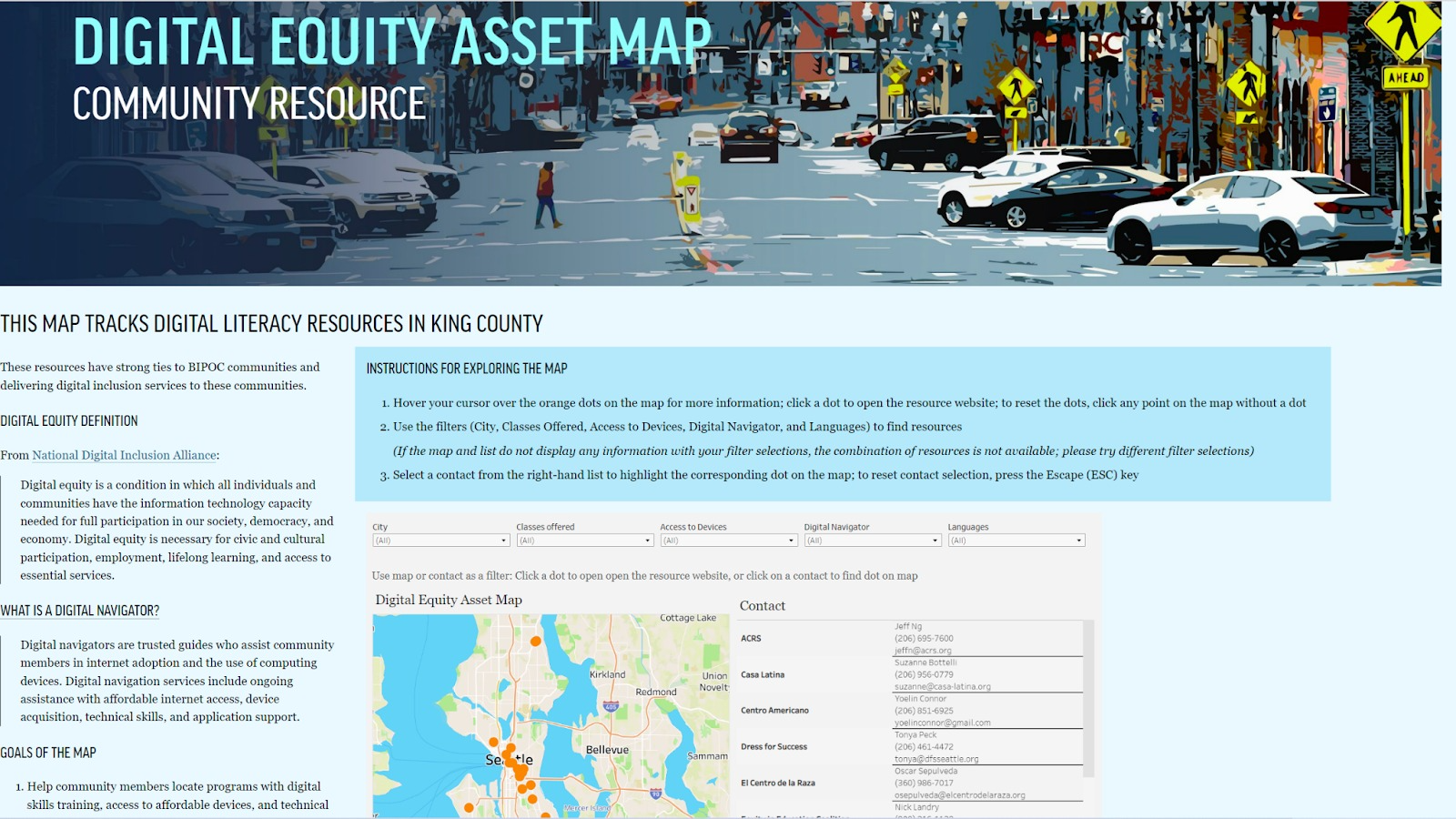
This online directory provides several filters and an interactive map, allowing users to search for specific digital inclusion resources in their area. The tool includes a brief description of the services, a point of contact, and website links for each asset. It also provides a contact person so users may easily submit updates and new resources to the directory.

See King County’s Asset Map

Have you used asset mapping in your own community?

Have you used NDIA’s free asset mapping tools in the process? We’d love to know about your process, lessons learned, and more examples of digital inclusion asset mapping! We’re also always looking for free-to-replicate versions to share with our growing community of NDIA affiliates. Please email us at [email protected] to share your progress and resources with the broader community.