Skip to content
Research & Data

Digital Inclusion Impact Aggregator

A tool for assessing digital inclusion ecosystems.
What is the Digital Inclusion Impact Aggregator?

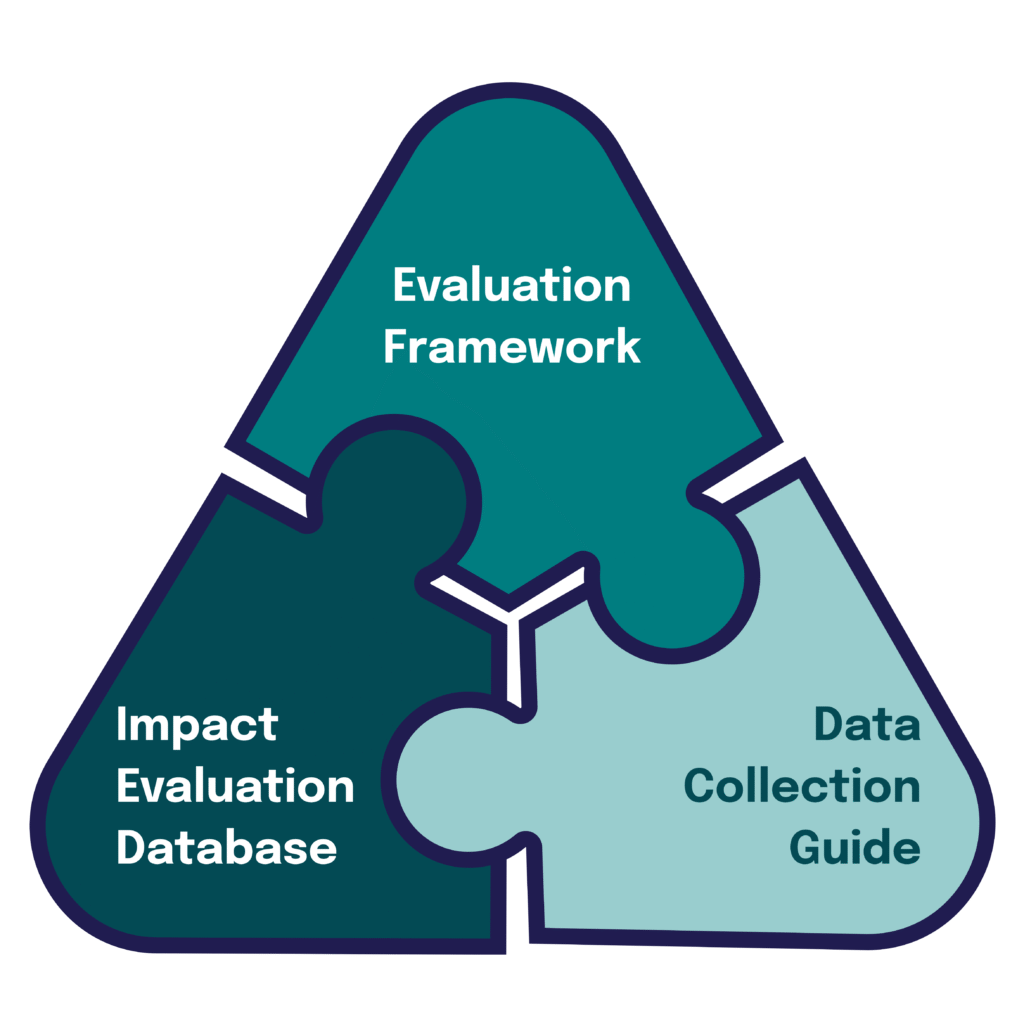
The Digital Inclusion Impact Aggregator is a comprehensive suite of resources for evaluating programs across the entire digital inclusion ecosystem. This tool assesses impacts at the strategy, measurable objectives, and ecosystem levels, enabling measurement, evaluation, and reporting on a broad scale to funders, state leaders, policymakers, and partners.


The Digital Inclusion Impact Aggregator consists of three distinct components:

  1. An Evaluation Framework made up of a series of logic models
  2. An Impact Evaluation Database
  3. A Data Collection Guide


The Tool’s Impact

Creates an understanding of digital equity across the digital inclusion ecosystem.

Shows the effects of programs and initiatives to improve digital inclusion.

Supports sustainable digital inclusion ecosystems by helping decision-makers make data-informed funding decisions.

How to Use the Tool

Administrators, funders, evaluation partners, and direct service or ecosystem partners involved in digital inclusion programs will all utilize the Digital Inclusion Impact Aggregator. The components of this tool are designed to be used collectively, rather than in a specific sequence. One way we envision using the tool is as follows:


  1. In collaboration with the evaluation partner, the administering organization reviews the tool’s components to identify the most relevant aspects for its digital equity implementation plans. The Evaluation Framework outlines the database’s contents and the metrics that will be measured. The framework serves as an excellent starting point.
  2. The administering organization customizes the tool’s templates to align with its goals.
  3. The organization provides the tailored database reporting forms and the Data Collection Guide to its direct service partners, ecosystem-building partners, and grantees as needed, along with necessary training.
  4. Partners involved in direct service and ecosystem building utilize templates and guidelines for data collection during service delivery (along with their existing data collection tools), recording this information in the Impact Evaluation Database.
  5. The Impact Evaluation Database aggregates the data from various tables for the administrator and evaluation partner to generate reports.

Access the Tools

Data Collection Guide


This guide provides instruction and recommendations for collecting data to enter into the Impact Evaluation Database.


  • Recommendations and instructions for collecting data about direct service and capacity-building programs
  • Data collection templates (such as impact surveys, intake forms, and more)
  • Adaptable materials
Download the Data Collection Guide.


Evaluation Framework with Nested Logic Models


The Evaluation Framework with Nested Logic Models is a modular and scalable blueprint to organize data collection and the evaluation approach.


Set of nested logic models:

  • Ecosystem
  • Measurable Objectives (5)
  • Strategies (5)
Download the logic models.

Impact Evaluation Database


A tool to aggregate program data and evaluate progress on digital equity goals at the objective and ecosystem levels.


  • Airtable template and open-source versions
  • Shareable reporting forms for practitioners
  • Summary reports for measurable objectives & the entire digital equity ecosystem
Access the Impact Evaluation Database in Airtable.


Digital Inclusion Impact Aggregator Data Dictionary


The data dictionary explains the structure of the Impact Evaluation Database (the interactive component of the Digital Inclusion Impact Aggregator). Paired with the codebook, the data dictionary provides an explanation of how to customize the Impact Evaluation Database to align with various digital inclusion goals and strategies.


Both the data dictionary and codebook are intended to orient the entity that will serve as the database administrator to the basic structure and mechanics of the Evaluation Database.


Download the Data Dictionary.


Digital Inclusion Impact Aggregator Codebook

The Aggregator Codebook lists all the data collection points of the Impact Evaluation Database and related field information. View the codebook alongside the Aggregator Data Dictionary to see how data is organized and consider which aspects are relevant to your goals and anticipated digital inclusion activities.


Both the data dictionary and codebook are intended to orient the entity that will serve as the database administrator to the basic structure and mechanics of the Evaluation Database.


Download the Codebook.


Hire NDIA to help implement the Aggregator

While NDIA’s tools are always free to use, we also take on consulting work that helps practitioners implement and customize them. We also provide consulting support around data, measurement and evaluation in general. If you’d like to find out how NDIA could support your organization, let’s talk: [email protected].

For example, NDIA has helped funders, coalition leaders, and local and state governments to:

  • Create custom instances of the Aggregator database that reflect local or state digital inclusion priorities.
  • Provide training and ongoing assistance to staff on managing database administration and data collection from reporting organizations.
  • Leverage the Aggregator tools to develop measurement and evaluation strategies, including standardization of data collection and reporting, identification of priority metrics, and training on data collection and reporting for organizations running digital inclusion programs.
  • Convene grantees, stakeholders, and other potential contributors to build consensus around the value of ecosystem-level measurement and evaluation, including benefits to individual participating organizations and collective benefits to the entire ecosystem.
Why did NDIA create the tool?

NDIA developed this tool because no existing digital inclusion program evaluation tool covered the entire ecosystem. Ecosystem-wide program evaluation is essential for assessing strategy, goals, and ecosystem impacts. It allows for ecosystem-level measurement, evaluation, and reporting to funders, state leaders, policymakers, and partners.

In mid-2024, states and territories received State Digital Equity Capacity Grants to support their Digital Equity Plans, funded by the National Telecommunications and Information Administration (NTIA) under the Digital Equity Act (DEA) Programs. At the same time, local organizations prepared for DEA funding, as local digital inclusion initiatives had significantly increased, spurred by the pandemic.

Despite this increased support, states still needed better tools to evaluate their progress toward digital equity. To address this gap, NDIA, Dr. Colin Rhinesmith, and Merit Network collaborated to build on the existing Digital Opportunities Compass and develop tools for states and territories to benchmark, measure, and assess their digital equity initiatives. NDIA worked with eight states—Colorado, Connecticut, Hawaii, Maine, Maryland, Massachusetts, Ohio, and West Virginia—to develop these tools. 

The Digital Inclusion Impact Aggregator was never intended to measure progress of implementing the DEA funds alone, but to support an ecosystem-wide approach to evaluation.

Who is the tool for?

The Digital Inclusion Impact Aggregator was initially designed as an open-source and accessible resource for states, Territories, and the District of Columbia, but other entities may find it valuable. Local and regional governments, digital inclusion coalitions, smaller municipal and county governments, or organizations engaged in holistic digital inclusion work can adapt the tool to their needs. Because the tool measures aggregate data across programs and strategies, it can benefit anyone interested in comprehensively evaluating their digital equity ecosystem. 

While the Digital Inclusion Impact Aggregator includes recommended measures and provides data collection guidance, it is not a complete program evaluation resource and does not replace the need for a third-party program evaluator. Instead, we designed it with digital equity staff and their evaluators in mind, so both can use it to evaluate the state of their digital inclusion ecosystem.

Related Resources

View More Resources