Skip to content
Program Support

AI is a Digital Skill

As AI continues to reshape our world, community organizations are exploring how to bring this technology into digital skills programs in ways that are practical, safe, and empowering for the communities they serve. Whether the students are high schoolers or senior citizens, urban residents or those in rural communities, AI instruction is a natural next step in the ongoing mission to close the digital divide. Access to resources, education, and training determines who will adapt to societal changes brought about by advances in AI and who will be able to confidently exercise critical thinking when engaging with the technology. 

“We introduce AI as both a digital skill and a thinking tool. For many learners, especially older adults and job seekers, AI offers a new way to engage with technology that is personal, responsive, and exploratory. It helps people organize thoughts, test ideas, and work through complex tasks using their own input as the starting point. This creates a powerful opportunity—not just to build skills, but to gain confidence and clarity in a fast-changing digital world.”


Molly Sherman, Executive Director, Carroll Technology and Innovation Council

Teaching AI Digital Skills


While there may be disagreement about the extent to which society will adopt AI, there’s no denying that advances and widespread implementation of technologies are changing the way we understand and interact with technology in our daily lives.


Everyone needs AI literacy, because without it, a person may be:

  • Susceptible to AI-aided scams
  • Unprepared to vet answers written by AI, including summaries in web search results
  • Unable to manage their privacy
  • Spending time and effort working inefficiently
  • Unaware of how they are impacted by AI use by others, like potential employers, social media companies, law enforcement, etc.

What Learners Need to Know


  • How their data may be used
  • How they may be impacted by institutions that use AI
  • How to verify AI outputs
  • What AI can and can’t do
  • How they might leverage tools to advance their goals
  • How to develop judgment about when to use AI
NDIA AI Working Group

NDIA hosts an AI Working Group that serves as a community of practice for digital inclusion practitioners in our affiliate community. The working group discusses the intersection of AI in digital inclusion work, considerations for incorporating AI into digital skills programs and curriculum, and program delivery models for effective community learning. Email us at [email protected] to become part of the AI Working Group and collaborate with others leading this work.

NDIA AI Pilot Programs

Through collaborative AI pilot programs with community-based organizations, NDIA explores diverse strategies for incorporating AI into existing digital skills curricula. These programs cater to a wide range of individuals with diverse learning needs, spanning all ages and professional or personal objectives. NDIA provides support to digital skills instructors, helping them strategize and select appropriate content for their AI-integrated courses.

WinstonNet


NDIA partnered with WinstonNet in North Carolina to incorporate AI lessons into the “Technology Skills for Life and Employment” course. The 30-hour, five-week course offers basic digital skills topics and learning goals and is designed to support individuals seeking computer basics skills to advance personal and professional goals.

Takeaways


  • Core digital skills topics and learning goals have natural integration points for AI-learning.
  • Students experienced shifts in their perspectives on AI and its usefulness after being exposed to instruction and exploration of use cases.
  • Discussion and reflection time reinforce learning and inspire questions about societal use.
  • Some students remain fearful or maintain misconceptions.

Read the full report to learn more about how AI was incorporated  into the digital skills curriculum.

Shaping Our Appalachian Region (SOAR)


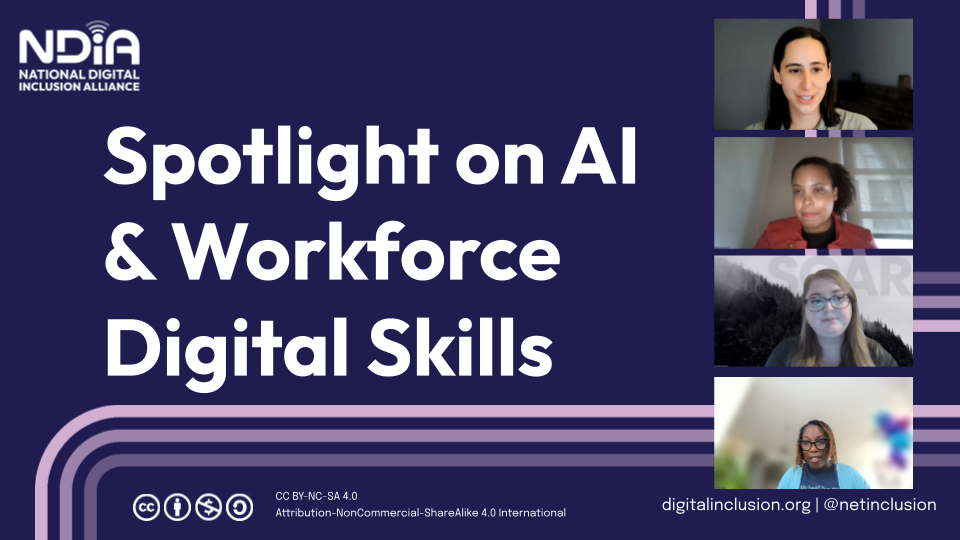
Based in Eastern Kentucky, SOAR’s digital inclusion programs offer residents hands-on learning opportunities for job seekers and individuals in need of digital skills training. In partnership with NDIA, SOAR launched a pilot program to integrate AI into its digital skills programs, helping learners understand the proliferation of AI in society and strategies for leveraging AI in the job search process. Anticipating the expansion of AI in the application and interview process, the curriculum prepares job seekers to interact with AI tools that employers may adopt to screen and interview applicants. The curriculum also focuses on the safe and effective use of AI to support resume development and on-the-job applications of AI. 

National Digital Equity Center (NDEC)


Based in Maine, NDEC offers over 45 learning opportunities to help individuals develop competencies in a range of digital skills, including the use of specific devices and how to leverage common on-the-job tools. In partnership with the NDIA, NDEC launched a pilot program to integrate AI into its course offerings, supporting the growing need for individuals to effectively search and apply for jobs online. Recognizing that digital skills are crucial even in the early stages of the job search process, the curriculum aims to help students understand how to use a job search platform, develop a resume, and use AI tools to support the writing process.

AI for Digital Inclusion Providers Training

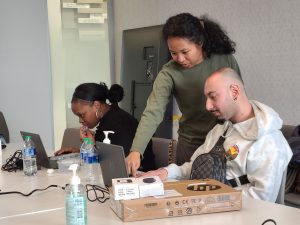
Aimed at practitioners who are looking to upskill themselves around AI and/or integrate AI into their digital skill offerings, this workshop will provide you with a basic overview of artificial intelligence. We’ll discuss key terms, how AI is built, and how bias and error can make their way in. We’ll also dig into ethical use, potential pitfalls for learners, and how other programs have approached teaching AI. Tickets are $75 per person, and a discount is available for Affiliate+.

Upcoming Trainings:

Recent AI Resources and Blogs