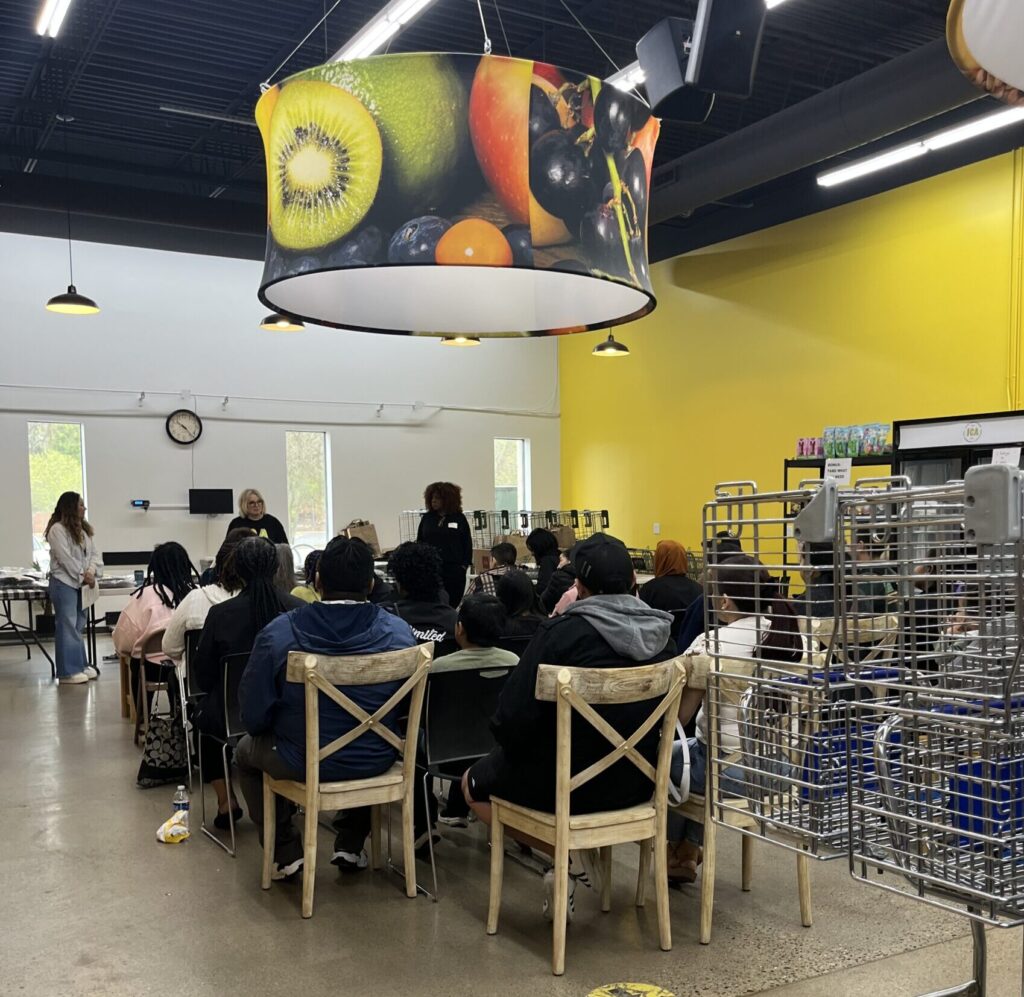
On Sunday, January 25, 2026, our executive director Angela received an email with the subject line “Help Needed in Minnesota.” By Monday morning, we were on a call with the leaders of the Hopkins Digital Access Initiative (HDAI) – Rebekah Crosby, Carolyn Leslie, and Beth Kivett – forging a new partnership to address urgent digital inclusion needs in Hopkins, a first ring Minneapolis suburb, a community flooded with ICE and CPB agents.
The tactics employed by ICE and CPB in Minnesota made it unsafe for many Hopkins residents to leave their homes. It echoed of early-COVID lockdowns that left people cut off from their community, wondering how they would continue to work, go to school, feed their families, or do any daily activity. As rapid response resources were organized through websites, Whatsapp and Signal chats, and remote learning platforms, it became clear that digital access is still the linchpin that determines whether a household can receive support in a time of need.
Lesson Learned: Times of crisis put the digital divide in the spotlight. These moments are a powerful reminder that those who have connectivity, access, and skills can remain connected to their community when others cannot, which may mean access to lifesaving medical care, information on how to remain safe in emergencies, critical communication with family and friends, and more vital resources. During prolonged crises, connectivity allows people to participate in faith communities, earn income, maintain social connections, support others, and participate in more activities that contribute to individual and community resiliency.
At the start of 2026, HDAI was wrapping up months of community engagement, asset mapping, and a needs assessment, so they deeply understood their community’s need for digital access and the barriers they faced. They were poised to begin planning and implementing programs to support sustainable digital access for everyone in Hopkins with the intention of moving forward deliberately, at a speed that prioritized community partnership and earned trust, just as they had done all along. Instead, they were facing a crisis that required an urgent and immediate response.
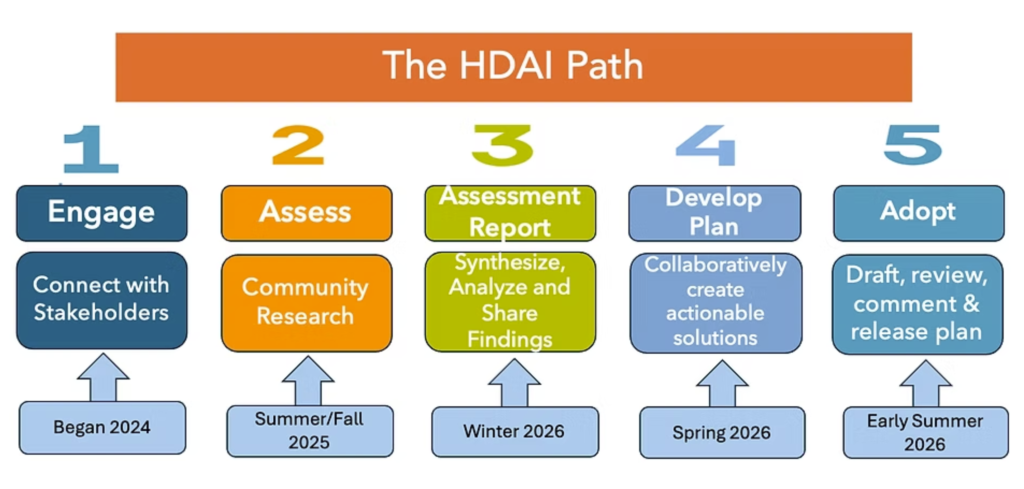
HDAI identified some initial needs. First up, connectivity for households without home internet or who would lose home internet when they fell behind paying their bill after being unable to leave their house for work. Closely related, those households would also need a device capable of supporting meaningful access. NDIA reached out to 35 Mile Foundation, who stepped in the same day, and within a week had committed to provide hotspot service and funding for devices, like laptops.
Lesson Learned: Hotspots are still a vital resource to provide an immediate and flexible connection to the internet for households in moments of crisis or financial instability.
HDAI also needed a local nonprofit partner capable and willing to manage the financial aspects of 35 Mile’s grant. The answer was easy – HDAI had spent months building a relationship with the ICA Food Shelf which manages community support for not only food, but also housing, jobs, and more. The trust established in that relationship paid off, allowing HDAI to facilitate the connection between ICA and 35 Mile. ICA was already operating beyond their capacity providing other critical emergency support, so their first connection was a quick introductory call with HDAI on the line. Together, the group quickly outlined a plan of action. With a warm introduction and support from HDAI, ICA and 35 Mile fast-tracked the paperwork so the effort could kick into action as soon as possible. Trusted relationships were also key to getting the needed devices quickly. NDIA and 35 Mile introduced HDAI to local computer refurbisher PC’s for People and hotspot distributor Human-I-T. With these connections and funding in place, HDAI could purchase low-cost hotspots and laptops.
Lesson Learned: Invest in partnerships and trust before they are needed. HDAI’s biggest advice for any community that wants to be prepared to respond to future crises is to start talking to each other now. Build those community human networks.
ICA was the perfect partner for hotspot and device distribution because they knew how to get physical items to the people that needed them. In the days and weeks following the influx of immigration agents in Hopkins, they were at the center of support programs to meet the most critical need – food. Home food distributions were established, and volunteers completing food deliveries quickly learned there were some important considerations needed to ensure they weren’t exposing clients to additional risks. HDAI could learn from those experienced volunteers and leverage the same networks to deliver devices.
Lesson Learned: When looking for partners in times of crisis, consider what the most critical need is and how it is being met. The organization meeting that need will be ahead of you in figuring out how to reach the people, but they will also have their hands full. Figure out how to build on the work they’re doing and make it easy for them to partner with you.
Once the wheels were in motion for hotspots and computers, HDAI tackled the human support needed for digital skills. We discussed several options including leveraging support provided by the library, seeking grant funds to hire short-term digital navigators, creating a hotline staffed by existing digital navigators around the country, and finding local volunteers. Ultimately, HDAI started recruiting volunteers who understood the situation on the ground in Hopkins and wanted to help as digital navigators, and also incorporated staff of local organizations that frequently support people with low digital skills. NDIA provided training to the digital navigators. The City rolled the volunteer digital navigator positions into its standard volunteer engagement process, which included background checks and defined responsibilities. HDAI set up a phone line and workflow to forward voicemail requests to volunteer digital navigators.
Lesson Learned: Digital skills can be taught a variety of ways, but digital navigators are the most flexible and responsive option. In times of crisis, they can support immediate troubleshooting and teach just enough digital skills to meet critical needs. Programs established in “normal” times should prioritize sustainability and long-term digital resilience, but to meet needs in a crisis, you may need a stronger emphasis on immediate, responsive, flexible support. This might mean creative staffing and asking for help. Still, training is important and will slow down deployment, so think about scaling services in stages so more digital navigators can be trained over time. For more specific tips on teaching digital skills to communities targeted by mass enforcement actions, check out our earlier blog.
Today, neighborhoods in Hopkins look different than they did in February, but community members are still living with impacts from that time. Families are still unsure if they are safe going about daily activities and workers are still recovering from lost wages and lost jobs. Some community members have returned home and some have not. HDAI is there, continuing to support these families with the services they established earlier this year, and they are planning transitions for future, sustainable digital access support in Hopkins. Recently, HDAI saw their community come together in person for an event they hosted with ICA. Volunteer digital navigators, food shelf employees, and city workers experienced joy and hope alongside families that received a hotspot, a laptop, and a human connection. HDAI reflected with this message to attendees: “We learned so much from this emergency response program and continue to be inspired by the community members who share their stories. Sometimes you can’t wait for a big pot of money or a year’s long planning group to make a difference, sometimes real and meaningful impact comes from a thoughtful investment, local people with practical and realistic ideas, and just getting started.”
Keep up with what’s next for the Hopkins Digital Access Initiative through their website.
To read more about this project and HDAI’s partnership with the 35 Mile Foundation, check out the 35 Mile blog: Meeting the Challenge: The Hopkins Digital Access Initiative, Then and Now.