“Technology isn’t just about computers—it’s about creating access to jobs, education, healthcare, and staying connected with family,” says Joseph “Joe” Hillaire, the lead Digital Navigator for Lummi Nation, a Tribal land located along coastal northern Washington state.
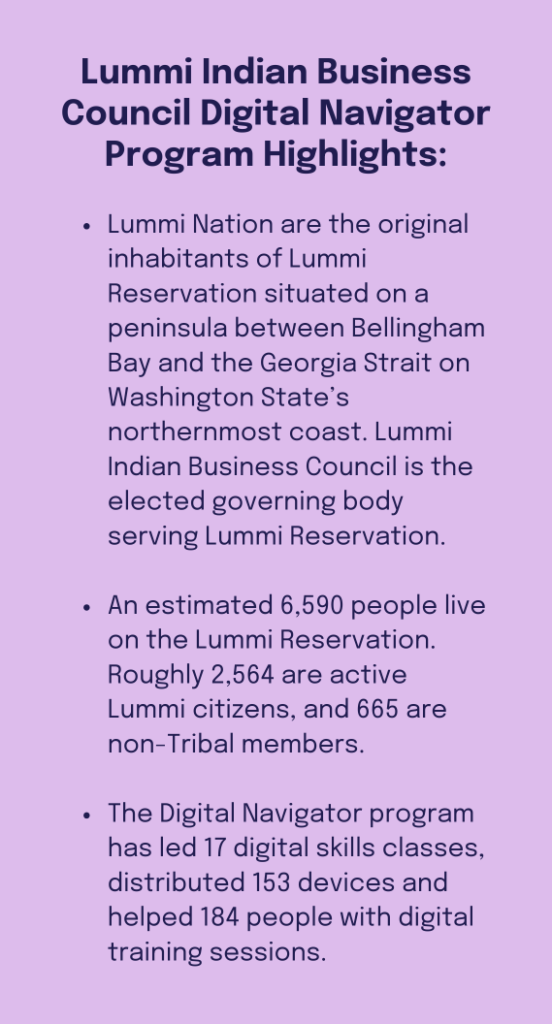
Joseph Hillaire, or Joe, is helping the Lummi Indian Business Council (LIBC) build a Digital Navigator program by providing skills training and facilitating access to digital tools for residents of the Lummi Reservation.
The Lummi people have deep ties to the surrounding waterways, which are central to their way of life and fishing traditions. Despite being only eight miles west of Bellingham, the reservation can become isolated due to flooded roads that cut off access to the outside world. As is the case with many rural areas, reliable internet access and digital literacy are significant barriers to opportunity. While connection is essential to preserving cultural traditions passed down through generations, it is also crucial for navigating today’s world. Bridging that gap is a delicate balance.
Expanding Digital Access and Skills
LIBC’s Workforce Development Department has long provided employment and training services to the nearly 6,000 Tribal members, yet they recognized that digital skills were becoming an increasingly essential part of self-sufficiency. Selected by NDIA as part of its original National Digital Navigator Corps, with the support of a Google.org grant, LIBC’s Digital Navigator program was launched to:
- Increase access to affordable internet and devices.
- Provide personalized digital skills training.
- Prepare individuals for workforce opportunities.
The impact of having a device is significant. The Device Distribution Program has already distributed 69 laptops, 36 tablets, and 48 Chromebooks, helping community members access online education, job applications, telehealth, and government services.
One Tribal member received a laptop through this program and enrolled in an online workforce training workshop. With Joe’s help, they learned how to navigate coursework, submit assignments, and access learning materials, setting them up for career success.
Alongside device distributions, Joe and his team have hosted 17 digital skills workshops, helping 184 clients build confidence in using technology, connect with essential services, and ultimately build brighter futures.
Meeting People Where They Are
Reaching the community has required creativity and persistence. Many Tribal members first heard about the program through emails sent via the LIBC listserv, flyers in the Tribal newspaper, and word of mouth. But Joe knew that simply offering technology wasn’t enough—he needed to meet people where they felt comfortable.
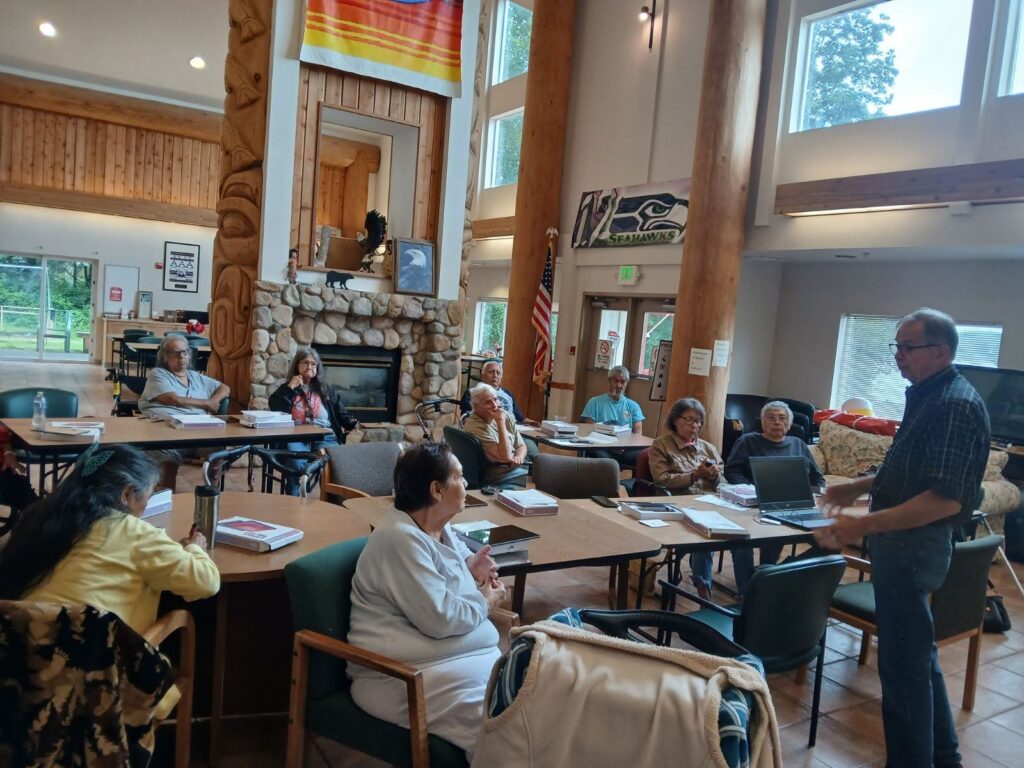
One of the most successful outreach efforts has been partnerships with local organizations, including Evergreen Goodwill of Northwest Washington, which brings a digital equity bus—a mobile computer lab—to the reservation for hands-on training. The bus has visited locations including Little Bear, home to many Elders, where classes focused on an ‘introduction to tablets’ and cell phone basics. For many Elders, this was their first experience using touchscreen devices, and Joe was there to guide them step by step.
“We see people who may have never used a laptop or don’t have an email address,” Joe explains. “Helping them build that foundation is a big deal.” After attending workshops, several Elders returned for follow-up training, eager to stay connected with family and access online resources.
Digital Skills for Every Generation
The Digital Navigator program serves a wide range of community members, with a particular focus on Elders and those seeking job training or continuing education.
For Elders, Joe offers weekend workshops at the Employment Training Center, where small group settings provide a welcoming space for learning. Topics range from basic computer skills and internet navigation to cybersecurity training, which has become a growing request as more Tribal members recognize the need for online safety.
For job seekers, Joe helps clients navigate online job applications, create resumes in Microsoft Word, and use Excel for workplace tasks.
Crystal, a student in the two-year Direct Transfer program at Northwest Indian College, turned to the Digital Navigator program for support in her educational journey. Focused on completing her degree to qualify for better job opportunities and advance her career, she had been relying on an old, outdated device passed down from a family member. The device was slow and unreliable, making it difficult to complete assignments or access her online courses.
Once Crystal connected with the Digital Navigator program— everything changed. She received a new laptop and direct support through the (now expired) Affordable Connectivity Program (ACP), ensuring she could stay connected throughout the school year.
“Before I connected with the Digital Navigator, I had an outdated device, and it made it really difficult to get my college work done. They helped me get a new laptop and completed the ACP application with me. Now, I can keep up with my classes and stay connected without worrying about internet access. By having these resources available to me, I’m not sure I would be where I am today.”
Crystal, Student, Northwest Indian College
With the right tools and support, Crystal is now on track to finish her degree and pursue the career opportunities she’s been working toward. The Digital Navigator Project gave her more than just the internet and a device—it gave her the confidence and access she needed to move forward.
As the Lummi Nation moves forward with plans to launch its own Tribal-run ISP, digital literacy will become even more critical to ensuring that everyone can fully take advantage of expanded connectivity.
Supporting Healthcare Through Digital Navigation
Beyond workforce development, digital literacy is playing an increasing role in healthcare access. Joe recently visited the Lummi Tribal Health Clinic to explore ways to help patients use telehealth services. Many community members struggle with setting up video calls for doctor appointments, accessing medical records online, or using patient portals for prescription refills.
One recent example was an Elder who needed help attending a virtual doctor’s visit but wasn’t sure how to use her phone for video calls. With guidance from Joe, she learned how to log in, schedule, and attend telehealth appointments independently, improving her access to healthcare.
Joe is now working to develop a telehealth workshop to bridge this gap, ensuring that everyone—especially Elders and those with mobility challenges—can access the care they need.
The Future of Digital Navigation at Lummi Nation
The impact of the Digital Navigator program is clear: community members are gaining independence, staying connected, and accessing new opportunities. “The community would miss it if the program were gone tomorrow,” says Alisha Pierre, Program Manager, Workforce Development at LIBC. “People rely on this resource, and we’re just getting started.”
With a new funding award from WA State Dept of Commerce, the Broadband Digital Navigator Project, LIBC is set to expand its digital inclusion efforts even further. Plans are underway to help Tribal members pay for internet service and cover the cost of upgrading routers and modems for more reliable service, removing yet another barrier to participation in the digital world.
For Joe and LIBC’s Workforce Development team, the work is about more than teaching people how to use technology—it’s about empowering Tribal members with the skills they need to thrive and building pathways to opportunity, one connection at a time.
“The more we can teach and support people in using technology, the more opportunities we create. It’s not just about getting online—it’s about making life easier, accessing essential services, and strengthening our community.”
Joseph “Joe” Hillaire, Lead Digital Navigator for Lummi Nation
By removing barriers to digital access, the Digital Navigator program is helping Lummi Nation residents stay connected, gain skills, and create new opportunities for the future.
Increasing Access, Affordability, and Adoption for Lummi Nation
- Helping Residents Access Essential Services. Through individual training, the Digital Navigator is equipping people with the skills to use a computer for email, telehealth doctor visits, and apply for jobs online, making it easier to access essential services, including healthcare, job applications, and government benefits.
- Building Digital Confidence with Foundational Skills. One effective way to reach more people has been to leverage the Device Distribution Program by offering introductory computer training sessions when devices are received. Lummi residents are building confidence in using technology for education and employment by providing foundational digital skills.
- Expanding Community Reach. The Digital Navigator program is reaching community members where they are by conducting outreach at community hubs like the Employment Training Center and local Elder housing and offering weekend digital skills workshops. Through partnerships with Evergreen Goodwill of Northwest Washington’s mobile computer lab and outreach via LIBC’s listserv and newspaper, the program is ensuring that more residents are aware of available services.