NDIA’s work in Native American and Indigenous communities has been profoundly shaped by its partnership with AMERIND, a Tribally owned/serving risk management company and partner with the National Digital Navigator Corps (NDNC), and me, Davida Delmar (Diné/Navajo), AMERIND’s Digital Inclusion Manager. As I reflect on this journey, it’s bittersweet to acknowledge that the NDNC grant program has ended, marking the conclusion of my role at both AMERIND and NDIA. However, I take immense pride in the invaluable knowledge and profound expertise I’ve been able to contribute, rooted in my experiences and the incredible network of Tribal communities who share their knowledge and stories with me.
The partnership between NDIA and AMERIND has truly opened doors and created unique growth opportunities. One of the pivotal moments was implementing an “Indian Country 101” training for the NDIA team. This initiative led to a crucial shift in perspective, enabling them to understand that Tribes are distinct political groups with a deep commitment to their sovereignty and a mindset of self-determination. This reframing has broadened NDIA’s approach, transforming it into a mutual exchange of knowledge, lived experiences, and impactful advocacy efforts.
Key Learnings and Achievements in Digital Equity Work:
- Building the Field: I’ve approached my work by helping NDIA to view Indian Country through the lens of cultural regions, considering their diverse cultural, ecological, or ancestral backgrounds. Together, we are actively building the field of digital inclusion in Indian Country, aiming for representation across all regions. I’m proud to share that the National Digital Navigator Corps had representation from six regions: the Southwest, California, Northwest Coast, Plateau, Great Plains, and Alaska, while the Seven Star Communities recipients spanned five regions: the Southwest, Eastern Woodlands, Great Plains, California, and the Plateau. I had the remarkable opportunity to visit all these regions, including Hawaii and First Nations in Canada, through various speaking engagements at significant events like the National Telecommunications Tribal Association (NTTA) Summit, the National Congress of American Indians (NCAI) national conference, the Association for Tribal Archives, Libraries and Museums (ATALM) national conference, and the Indigenous Connectivity Summit (ICS). This work and outreach needed to be Native-led and reflective of Native interests.
- Language & Representation: It was essential for me and AMERIND to support NDIA in its intentionality surrounding the terminology they use in their work, helping to develop a style guide to ensure consistent and respectful language, including appropriate capitalization (e.g., Tribal, Indigenous, Native American, Alaska Native, Native Hawaiian, First Nations). Additionally, I spearheaded efforts to embed representation into how NDIA presents its work. I indigenized NDIA’s existing materials, presentations, activities, and examples to ensure the content resonates with participants from all corners of Indian Country, leading to more engaged discussions and fostering a sense of connection.
- Growing Our Affiliate Reach: By updating our registration processes for programs, events, and NDIA’s community of Affiliates, we initially identified 12 Tribal entities within our community. I’m thrilled to say that today we proudly partner with over 47 self-identified Tribal entities, and this number continues to grow as more communities discover our digital inclusion initiatives. This growth has been a constant highlight during our Digital Inclusion 101 presentations.
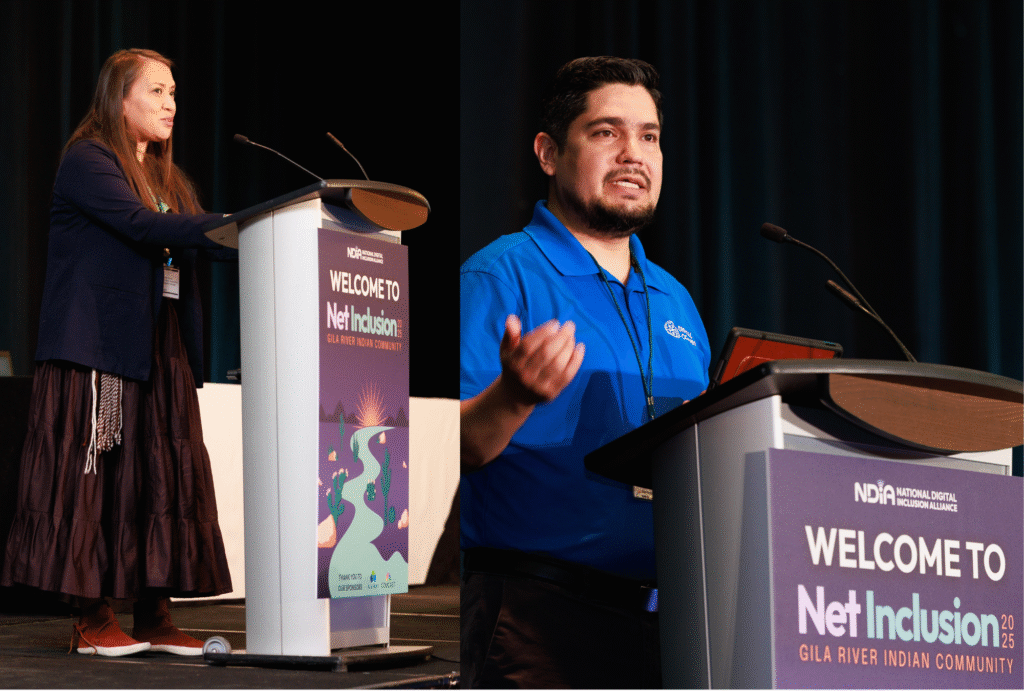
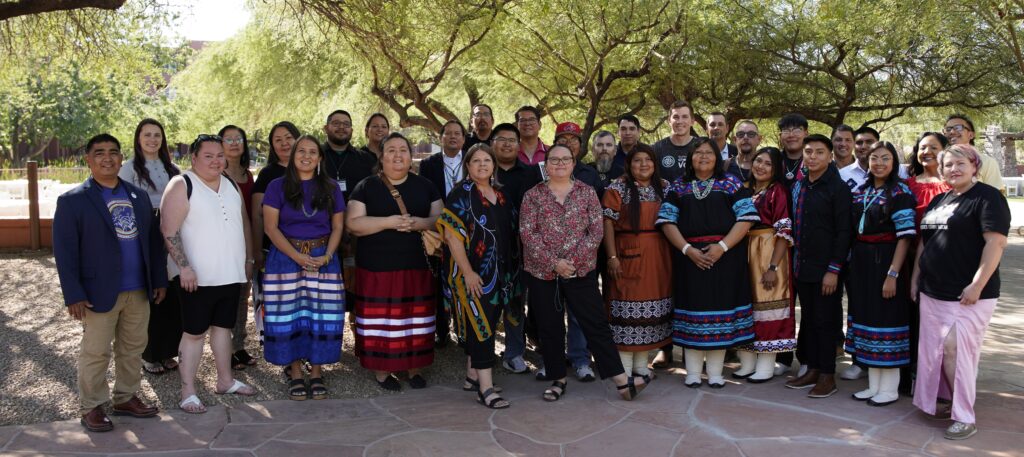
- Net Inclusion 2025 on Tribal Lands: A highlight of NDIA’s work in Indian Country was hosting Net Inclusion on Tribal lands earlier this year. The event’s success was largely thanks to Arizona’s dedicated local planning team and NDIA’s insightful board member, Mikhail Sundust (Gila River). Mikhail’s leadership on NDIA’s board offers crucial direction, and both he and the Gila River Indian Community generously shared their rich knowledge of the land, people, and history, enriching the digital equity community’s experience and fostering a stronger connection to Native culture with a touch of humor.
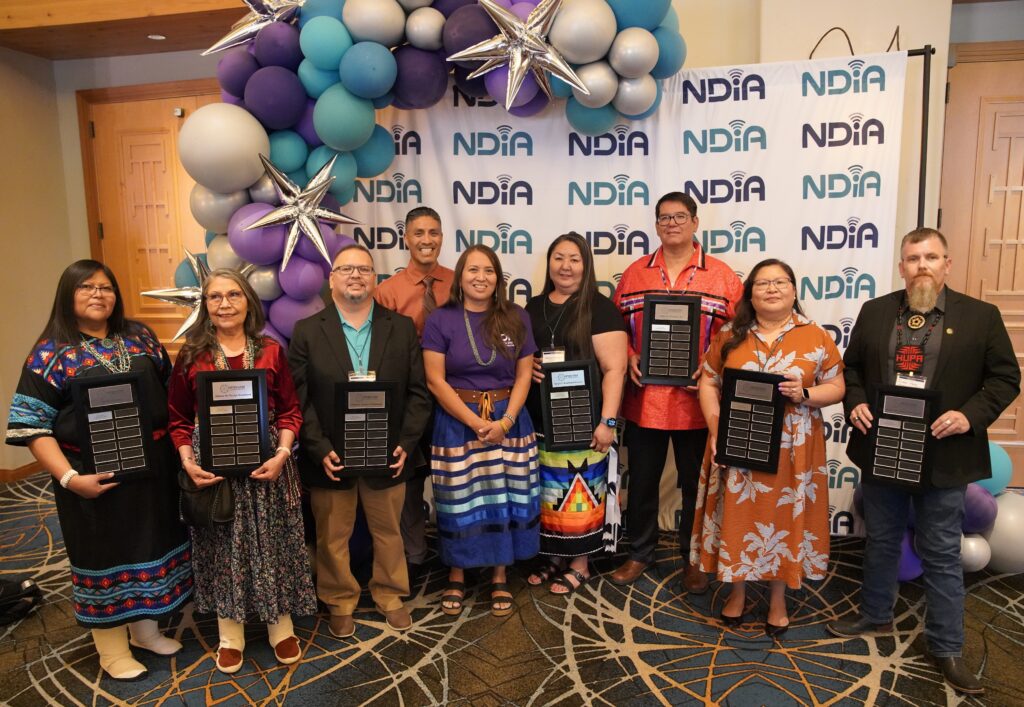
- Leveraging Community Knowledge through Seven Star Communities: The Seven Star Community Programs database is a rich repository of resources and concrete knowledge directly from the communities NDIA serves. The Seven Star Communities program was developed in collaboration with our mentor group to build a program that highlights traits of Tribal communities that are community-driven, sustainable, and reflective of distinct, culturally-rich communities and supports other Tribal communities that are working toward similar goals. Learn more about how to participate and apply for this year’s Seven Star Communities award.
- Prioritizing Infrastructure and Connectivity: NDIA has learned that work towards improved infrastructure and connectivity is uniquely intertwined with digital inclusion work in Indian Country. Digital inclusion in Indian Country includes addressing the historic exclusion of broadband infrastructure on Native lands, advocating for spectrum sovereignty, and acknowledging that community champions often focus on infrastructure. Internet service providers, frequently led by community members, are vital leaders in this area. NDIA supports these champions in expanding their digital equity knowledge, always acknowledging their existing work. My consistent leadership at Tribal Broadband Bootcamps, hosted by Waskawiwin and the Institute of Local Self-Reliance, helped to make this possible. The bootcamp incorporates digital equity into why Tribes are building these networks and how it’s directly impacting the end-user.
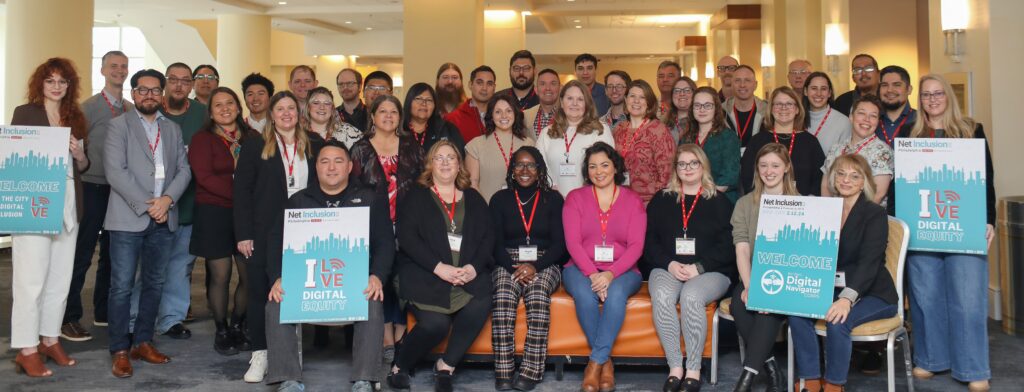
- National Digital Navigator Corps (NDNC): NDNC provided an opportunity for Tribes to adapt the digital navigator model to their unique communities, and in turn, for NDIA to learn how to support that work. Within the NDNC, the cohort model allowed for collaboration and tailored support within rural or Tribal contexts. Both faced similar challenges and have fostered new collaborations with each other that might not have emerged otherwise, including device procurement and distribution, and sharing valuable advice on outreach methods.
- Policy Advocacy & Guidance: NDIA’s policy team has been pivotal in building awareness and communicating with the community. This included ensuring Tribes were included in State Digital Equity Plans and providing more information, guidance, and support for Tribes applying for Tribal set-asides under the NTIA’s Digital Equity Competitive Grant and the Native Entities Capacity Grant. In recent years, NDIA has hosted Hill Day visits in partnership with Public Knowledge to feature digital equity champions. The past two years have featured community champions from the Gila River Indian Community, the Cherokee Nation, and the Pueblo of Jemez. These visits have been crucial for advocacy, outreach, networking, and validating the importance of NDIA’s and AMERIND’s work.
- Indigenous Digital Inclusion Working Group: This group was inspired by existing groups at NDIA that connect affiliates with shared goals. Initially, the Indigenous Digital Inclusion Working Group established a mission and vision rooted in digital inclusion and equity, which was important in defining how we fit into this field as sovereign nations. The group is within a collaborative environment and embraces an Indigenous, holistic approach to community networking.
This dialogue across Indian Country is vital for developing policies and protocols that protect and sustain knowledge, offering recommendations to USAC and NDIA for improving programs like ACP and Lifeline. More importantly, this working group breaks the silos we are working in and offers an opportunity to provide inspiration and foster collaboration.
Looking Ahead:
NDIA’s Seven Star Community (SSC) applications are currently open, and the database is now live and features essential work from Native communities. These database resources exist to inspire and support the work that other practitioners are doing to support Indigenous communities. The impactful stories captured in the NDNC blogs will serve as lasting resources.
Ultimately, investing in Indian Country brings widespread benefits, fostering economic interests, creating jobs, building skills, and leading to better policies for all. The more stories we share from Indian Country, the more we help NDIA advance representation and create relatable experiences for countless communities.