“For me, being a Digital Navigator is an opportunity to give back to the community that shaped me,” shares Tyler Smith, Gila River’s Digital Navigator. “I want to help elevate our digital skills and uplift our voices in the pursuit of digital equity.”
Born and raised in the Gila River Indian Community, Tyler embodies the mission of the Digital Navigator program. With his deep roots and passion for giving back, he is bridging the gap between infrastructure and accessibility, empowering residents one connection at a time.
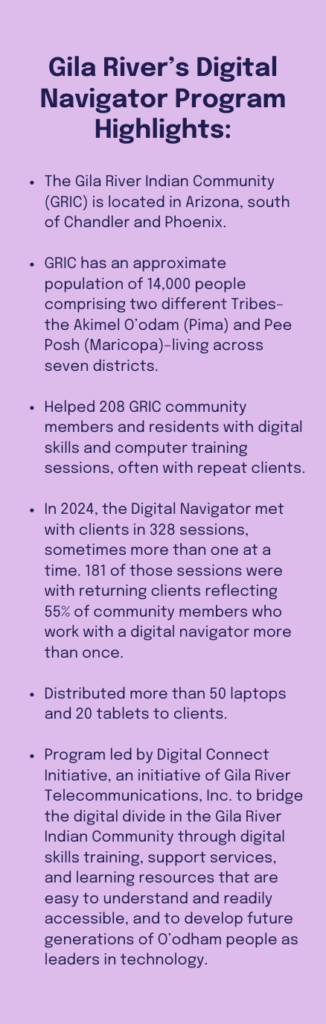
Technology is becoming an essential tool for preserving traditions and fostering new opportunities in the Gila River Indian Community, home to the Akimel O’otham (Pima) and Pee Posh (Maricopa) Tribes. Spanning 600 square miles across seven districts in central Arizona, the community faces unique challenges in ensuring everyone can access and benefit from the digital world.
While Gila River Telecommunications, Inc. (GRTI) has spent decades building robust broadband infrastructure, Digital Connect®, an initiative of GRTI, focuses on improving quality of life and developing future generations of O’odham leaders in technology. Through its participation in NDIA’s National Digital Navigator Corp program, with funding from Google.org, Digital Connect® designed its Digital Navigator program to create one-on-one connections with the people they serve.
Skepticism toward technology is common in Gila River, and Tyler has placed a special emphasis on serving the elders, ensuring they feel included in the digital age–at their own pace. In the program’s first year, much of the effort was spent on education and outreach, raising awareness about Digital Navigator services and demonstrating how technology could enhance lives.
A turning point came last summer when Tyler began tailoring his approach to meet the community’s unique needs. He now visits all seven districts weekly, spending three hours in each district’s service center or community center. Whether it’s a gym, computer lab, or meeting room, Tyler sets up shop with informational materials and assists residents with everything from setting up devices to navigating social services.
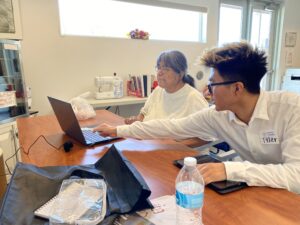
“Every experience is unique and special,” Tyler says. “Once I build a relationship with someone, I get to see their daily lives and struggles. It’s about respect and understanding what they need.”
One of the biggest challenges of the program has been ensuring that residents not only receive devices but also the tools and training to use them effectively. Tyler distributes devices like Dell Latitude laptops and tablets, using intake forms to assess each recipient’s skill level and tailor lessons accordingly. For many, these devices open up new possibilities—connecting to home networks, exploring online resources, and learning to use programs like Microsoft Office and Google Workspace.
One digital journey shows how access to technology and training empowers leadership and strengthens community engagement.
As Chair of the District 3 Community Meetings, Marlo Schurz plays a key role in organizing and leading discussions. However, without a laptop, managing meetings and communications was a challenge. Through the Device Distribution Program, Marlo received a laptop and, with guidance from Tyler, built her digital skills. She earned certificates in ProSkills Outlook and Canva, improving her ability to create materials and stay connected.
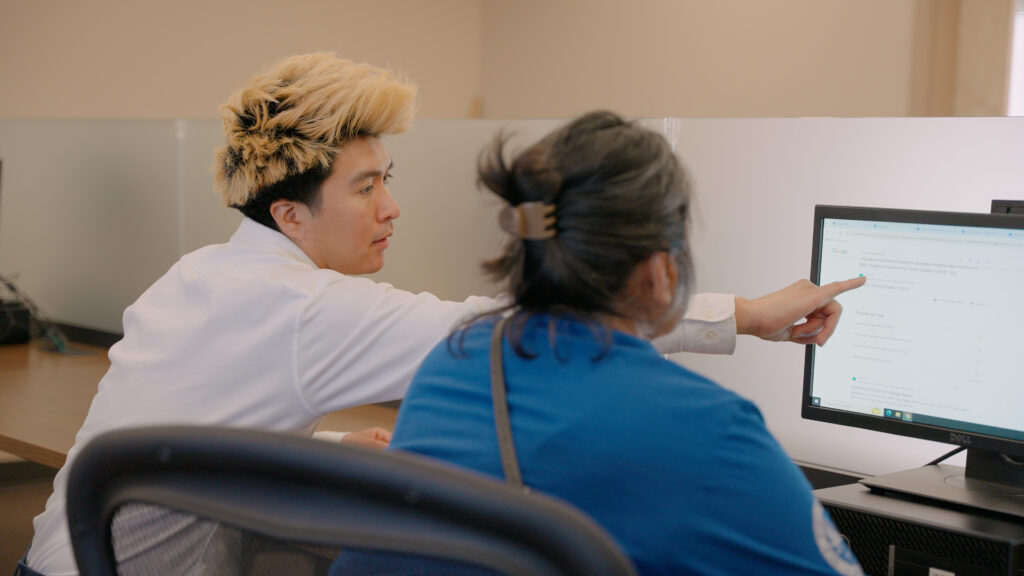
“Most people already had the internet at home but didn’t know how to use the devices to their full potential,” Tyler shares. “By walking them through their internet ecosystem and tailoring lessons to their needs, I’ve seen them gain confidence in navigating the digital world.”
The impact has been felt across all demographics, from elders learning to video chat with family to parents helping their children with online schoolwork.
Tyler’s Digital Navigator sessions have become the program’s primary driver of new clients. These unstructured sessions allow residents to drop in and receive help with their unique challenges. By meeting people where they are, Tyler has helped reduce the discomfort many feel about engaging with technology.
The program has also distributed over 70 devices and provided follow-up support to ensure recipients can fully integrate technology into their lives. Whether it’s helping an elder connect a laptop to Wi-Fi or teaching a family how to use their home network, Tyler’s efforts have made technology more accessible and less intimidating.
The Digital Connect® Digital Navigator program shows that digital equity isn’t just about infrastructure—it’s about people. By building relationships and fostering trust, Tyler is helping Gila River residents unlock the benefits of the digital age while respecting their unique culture and needs.
Mikhail Sundust, Digital Connect® ‘s Executive Director, captures the initiative’s essence: “This technology wasn’t made for our people, and that’s led to a natural distrust. But with a community-based digital navigator, we’re putting a face to the resources. It’s about humanizing technology and showing that it can support—not replace—our way of life.”
Bridging tradition with technology is an important part of the Digital Navigator program at Gila River, particularly Tribal elders. Pat Smith, a respected elder from District 6, has been part of the Digital Connect® Initiative since its first digital skills class. Eager to grow her small business, Thunder Woman Creations, she learned to use Instagram and expanded her digital skills through classes and one-on-one sessions with Tyler. Pat mastered essential online tools like email and banking and received a laptop through the Device Distribution Program. Her dedication even earned her the DCI Digital Citizenship Award.
For Tyler, the work is personal. “I’ve seen how connected our community is, and I want to be a bridge to help people feel comfortable with technology. It’s about listening, respecting, and making sure their voices are heard.”
Through tailored solutions, dedicated outreach, and a deep understanding of the community, the Digital Connect® Digital Navigator program is shaping a future where technology serves the people—and not the other way around.
Increasing Access, Affordability, and Adoption in Gila River
- Expanding Digital Resources. Digital Navigator sessions at anchor institutions connect residents with personalized support and bring in the most new clients for digital navigator services.
- Building Community Trust: The Digital Navigator engages with Tribal elders and leaders at meetings, fostering awareness and trust in the program and its training offerings.
- Enhancing Digital Skills: Residents who previously received laptops without training were given lessons on computer basics with the Digital Navigator.
- Increasing Client Engagement: The Digital Navigator expanded his outreach by visiting all seven districts weekly, spending three hours at each service center. By creating his own schedule and bringing informational materials on social services, he has increased face-to-face interactions and client engagement.