Alaska is a land of breathtaking beauty, where vast wilderness stretches as far as the eye can see and many Alaska Natives continue to live off the land, relying on subsistence hunting and fishing to sustain their way of life. For many, life’s daily priorities include securing food, water, and safe housing—making internet connectivity and digital skills understandably lower on the list of immediate concerns. However, the Alaska Federation of Natives (AFN) took an opportunity to show how digital skills could make life just a little easier, even in a place where the challenges of modern technology often take a back seat to more pressing needs.
AFN, the largest statewide Native organization in Alaska, represents 120,000 Alaska Natives through partnerships with Tribal corporations, nonprofits, and nearly 200 villages. With a mission to amplify Native voices and improve lives, AFN was selected to host a Digital Navigator program, as part of NDIA’s National Digital Navigator Corps funding from Google.org.
Emmanuel “Sajai” Borromeo, AFN’s lead Digital Navigator, knew there would be limitations and designed his outreach to meet Alaska Natives where they are—both geographically and in terms of digital skills. Sajai’s background in IT made him well-equipped to tackle the technical aspects of the role, but his new mission of community outreach required an entirely different approach. From Anchorage to remote villages, Sajai began by partnering with existing organizations to build trust, offer support, and bring the benefits of connectivity to Alaska’s farthest reaches.
For many Alaska Natives, life revolves around traditional practices and a strong connection to the land. Reliable, affordable internet access varies greatly across the state, sending emails or making online payments seem far removed from their daily lives. Sajai quickly learned that to make an impact, he had to meet people where they were—both figuratively and literally.

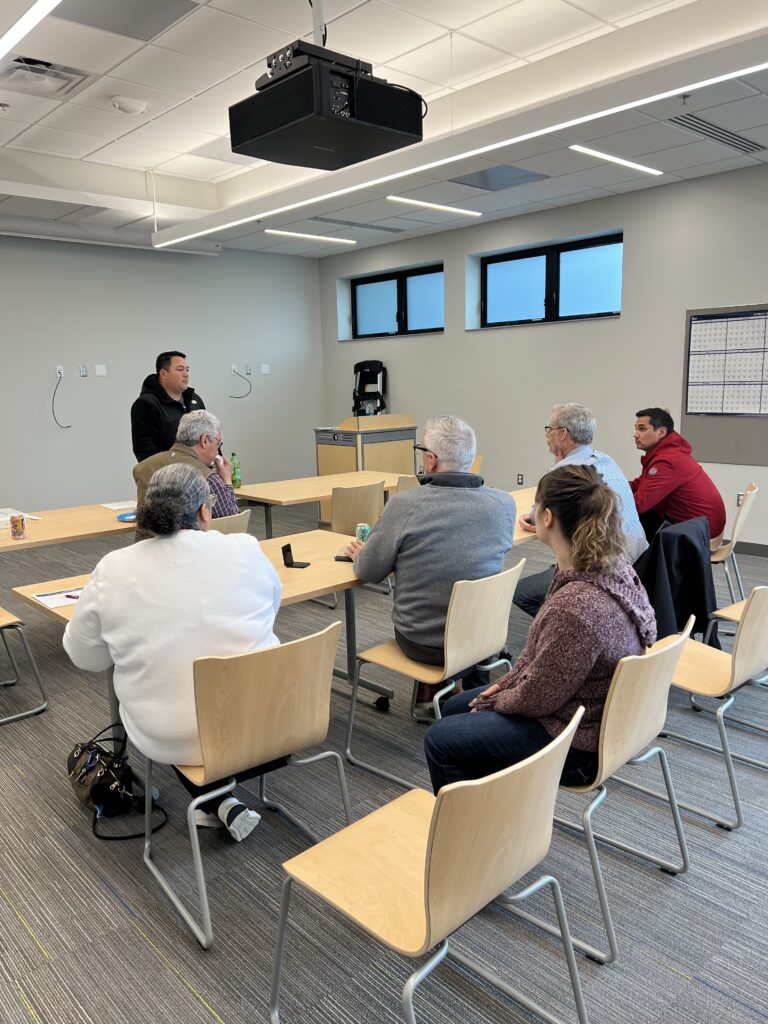
One key partnership was with the Housing Authority, which serves Alaska Native residents in Anchorage. Residents were required to transition to online rent payments but lacked the digital skills to do so. Many didn’t even have email accounts. Sajai hosted classes in the housing lounge to help residents sign up for email, navigate online payments, and answer questions about cybersecurity and device troubleshooting.
“The seeds of curiosity are planted when a person is made aware of how technology can improve their lives. Our first job as Digital Navigators is getting to know people, and then identifying ways in which technology can benefit them,” Sajai explains.
Elders, in particular, benefit from Sajai’s patient approach. One woman, hard of hearing and living alone in subsidized housing, became a regular client. Sajai guided her through signing up for the Affordable Connectivity Program (ACP), helped her purchase a laptop, and taught her how to use voice dictation to write emails. He even showed her how to scan documents and send them to the Tribal office, saving her hours of travel time. Over the course of five to seven meetings, Sajai empowered her to embrace technology as a tool to improve her daily life.
Alaska’s unique geography and remote living conditions posed significant challenges for the program. Many residents in villages don’t have physical addresses, only PO boxes, making it difficult to ship devices. In these cases, Sajai arranged face-to-face meetings when residents traveled to Anchorage. In the village of Nanwalick, where residents live off the land, Sajai built a relationship with the Tribal administrator and hosted a laptop giveaway for 10 families. His plan to provide in-person training in the village had to be postponed due to personal circumstances, but the effort demonstrated his commitment to building bridges between tradition and technology.
While the program’s outreach often began with simple incentives, like a free laptop for completing training sessions, it quickly became apparent that digital skills could have a profound impact on people’s lives. From teaching elders to stream their favorite shows on Netflix to helping families access online shopping, the Digital Navigator program showed that even small technological advances could save time and improve quality of life.
Sajai also worked to spread awareness through social media campaigns on AFN’s Facebook page, where clients often referred friends and family to his services. Many of the questions he fielded were basic—like how to set up an email account or troubleshoot a flip phone—but for those he helped, these small victories were life-changing.
Although many Alaska Natives continue to face challenges that overshadow the importance of digital connectivity, like clean drinking water and housing issues, the Digital Navigator program laid the groundwork for bridging the gap between tradition and technology. Sajai’s work demonstrated how digital tools can support traditional lifestyles, whether by enabling faster communication, simplifying daily tasks, or providing access to essential resources like education and healthcare.
By partnering with Tribal organizations, housing authorities, and local leaders, the Alaska Federation of Natives and its Digital Navigator program have shown that digital equity isn’t just about broadband and devices—it’s about empowering people to use technology in ways that make sense for their unique lives. While the program itself has shifted, its impact remains: a testament to the resilience and adaptability of Alaska Natives and the power of connection, both online and off.
Increasing Access, Affordability, and Adoption for Alaska Federation of Natives
- Find programming that works with your community. The Digital Navigator achieved positive outcomes by requiring skills training as part of the process to receive a laptop. Most participants who completed basic computer training became repeat clients, often returning with follow-up questions or to build on their digital skills.
- Assessing digital skills and customizing lessons. The Digital Navigator used intake forms to evaluate each individual’s skill level and tailored training sessions to help participants feel more comfortable using technology. This personalized approach ensured that lessons addressed each person’s unique needs.
- Community outreach with small steps and big impact. Scaling a program across Alaska’s vast geographic area proved most effective when partnering with existing affiliates or chapters. For example, the Alaska Federation of Natives collaborated with the Housing Authority, which required renters to transition to a new online payment system. AFN hosted meetings where the Digital Navigator led training sessions, teaching residents how to set up and navigate the system. These sessions not only addressed immediate needs but also fostered long-term digital adoption.
- Increasing visibility of Digital Navigator resources: The Digital Navigator actively participated in high-profile speaking engagements at national and state events, including Net Inclusion, annual infrastructure summits with the State of Alaska, and Alaska Municipal League gatherings. At the AFN convention, the Digital Navigator staffed a booth and was present at a statewide Tribal gathering in Anchorage to promote his services as a Digital Navigator.