NDIA & Benton Present the Digital Equity Champion Awards at Net Inclusion in Chicago
Each year at Net Inclusion, NDIA and the Benton Institute for Broadband & Society recognizes leaders in the digital inclusion movement through the Charles Benton Digital Equity Digital Equity Award. Named for Charles Benton, the founder of Benton Institute for Broadband & Society, NDIA created the awards to recognize leadership and dedication in advancing digital equity.
We have recognized 21 digital equity champions since the award launched in 2016. Each champion demonstrates:
- Sustained commitment to digital inclusion programs and an expertise in digital equity
- Innovation in addressing and solving digital inequities
- Dedication to serving communities and target populations who are most in need of digital inclusion services
- Demonstrated leadership and collaborative spirit
- Prioritization of diversity, equity, and inclusion in their work
- Use of data and evaluation to shape digital inclusion programs and share best practices
- Engagement in sustainable work that can be scaled and replicated
2026 Digital Equity Champion – Emerging Leader
Dr. Mariette Bien-Aime Ayala, Director of Curriculum & Instruction, Tech Goes Home
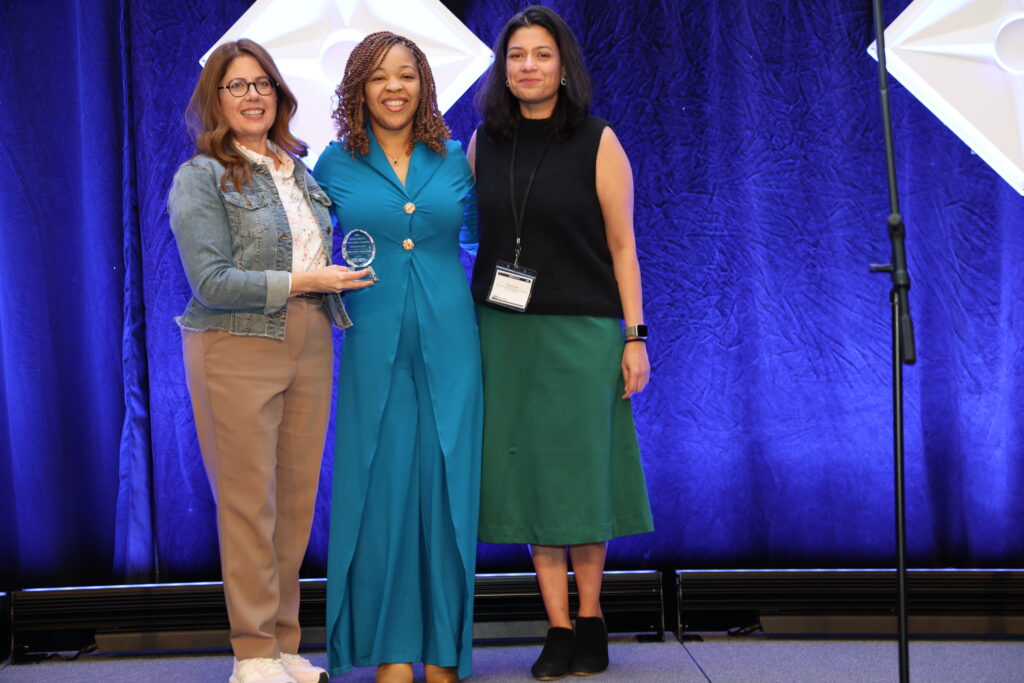
As Director of Curriculum and Instruction at Tech Goes Home, she built an entirely new Learning Management System featuring more than 100 modules that were refined through extensive community feedback and organized into eight culturally responsive learning pathways. She has created high-quality, barrier-reducing learning opportunities that meet residents where they are, honor cultural context, and support sustainable skill-building. This new structure has strengthened learner independence, expanded upskilling opportunities, and provided flexible, relevant education for vulnerable and historically marginalized communities. As a result, more than 6,000 Boston learners, primarily immigrants, low-income adults, seniors, and families, have accessed these pathways in the past year. Her leadership has reshaped how Tech Goes Home delivers digital literacy and established a scalable model for equitable, community-driven curriculum design.
Dr. Ayala demonstrates collaborative leadership by actively engaging instructors, community partners, and learners in shaping the curriculum. She led the redesign of the Detroit pilot into a hands-on, collaborative model serving 34 courses and 351 learners. She supervises and mentors staff, co-creates content with community groups, and integrates instructor feedback into curriculum improvement. Her leadership style elevates others and fosters a learning culture in which voices from marginalized communities directly influence the tools created to serve them. Beyond the tech, she is constantly in the community: coaching instructors, co-teaching pop-ups, gathering feedback, and iterating content quickly. This blend of multilingual delivery, flexible access, and community-embedded support is influencing peers and setting a practical standard for inclusive digital learning at scale.
2026 Digital Equity Champion
Bill Callahan, Founder and Director of Connect Your Community
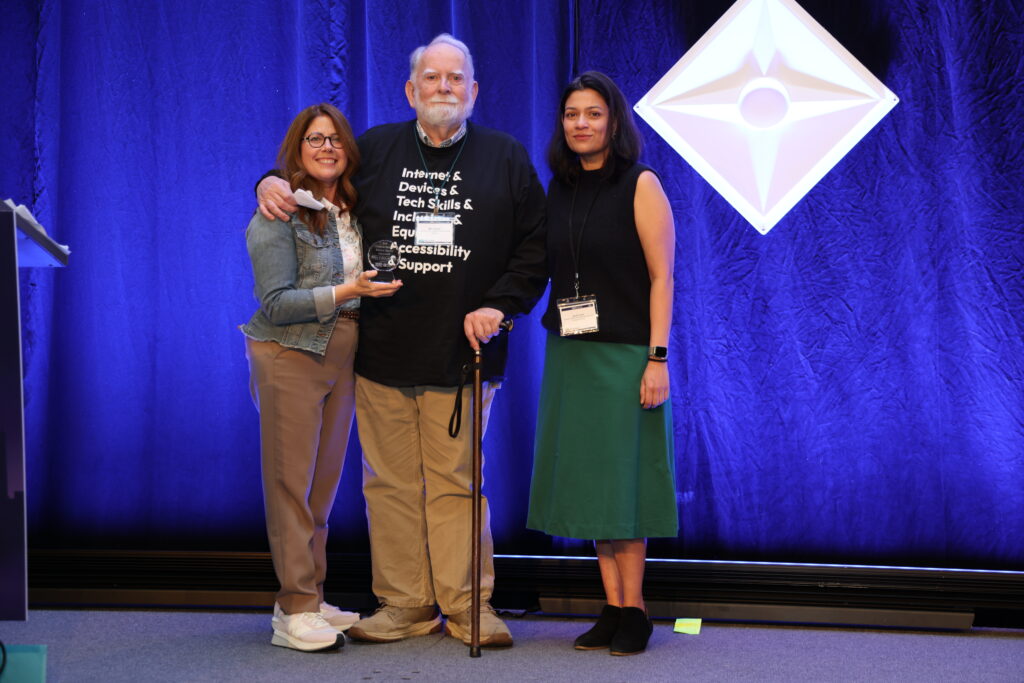
For nearly 40 years, Bill has been the “Godfather” of the digital inclusion movement, a title earned not just through his longevity in the field but also through his relentless commitment to exposing the structural roots of the digital divide. While many define digital inclusion simply as “access,” he expanded that definition to include “justice” and “accountability”. He fundamentally shifted the national conversation from blaming “non-adopters” to scrutinizing “non-deployers.” By helping lay the groundwork for NDIA and in leading Connect Your Community, he didn’t just build programs; he built the intellectual framework the field now stands on. He is a champion not simply because he leads CYC, but because he has consistently armed communities—no matter the size—with the data and arguments they need to fight for their own connectivity.
His most innovative contribution is the concept of “Digital Redlining.” Before his 2017 co-analysis of AT&T’s network in Cleveland, the digital divide was often framed as a problem of demand (people not wanting internet). He helped flip the script. Using FCC Form 477 and Census data, he proved that major ISPs were systematically excluding poverty-stricken neighborhoods from fiber upgrades, leaving them with slow, expensive copper connections while modernizing wealthy suburbs. This wasn’t just research; it was a novel policy tool that forced regulators and companies to confront their deployment bias. As NDIA’s former Research Director, he standardized how the field uses the American Community Survey (ACS) to measure broadband gaps. He doesn’t just use data for evaluation; he teaches it. His training modules empower local leaders to access and interpret their own community’s data, ensuring that digital inclusion plans are based on facts on the ground rather than assumptions.
2026 Digital Equity Champion
Kami Griffiths, Deputy Director, digitalLIFT
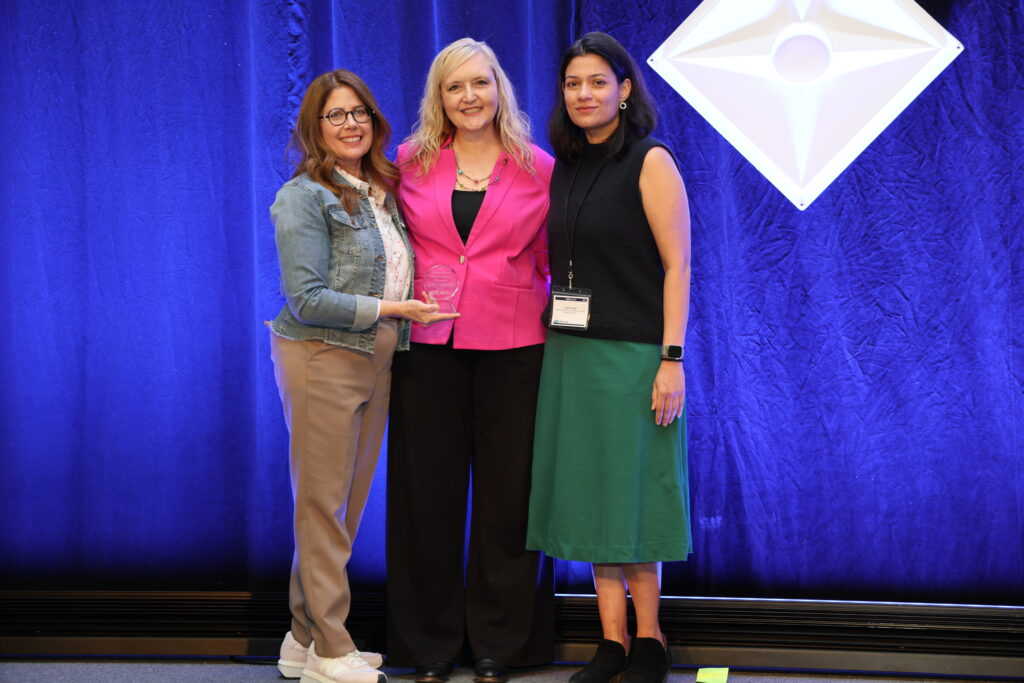
As the founding Executive Director of digitalLIFT (formerly Community Tech Network), she has spent more than two decades building the programs, partnerships, and national momentum needed to advance digital inclusion for those most often left behind. As a leader, she promotes bilingual contract trainers into staff roles and cultivates an inclusive culture where team members share and celebrate their cultures and traditions. Kami recognizes that closing the digital skills gap requires humans working directly with humans, and she has built programs grounded in trust, cultural understanding, and community connection. Through these actions, she models equity-driven leadership and fosters environments where diversity is integral to impact.
Under Kami’s leadership, digitalLIFT has grown from a local Bay Area initiative into a national force serving communities across Texas, California, and scaling services to reach partners nationwide. She pioneered community-based training models, culturally inclusive curriculum, multilingual instruction, and capacity-building programs that empower hundreds of nonprofit and government partners. In 2024 alone, digitalLIFT reached more than 6,000 adult learners, and trained nearly 1,000 trainers from government offices, peer nonprofits, libraries, community health clinics, and the like.
Do You Know a Digital Equity Champion?
NDIA and Benton release a call for nominations (or self-nominations) annually, usually in the fall. The awards are presented annually at NDIA’s Net Inclusion conference. Please see past Digital Equity Champions here. Thank you to everyone who submitted nominations for the 2026 awards, and if you weren’t selected this year, we invite you to submit your nomination again next year.
A heartfelt appreciation goes out to the 2026 Champions Selection Committee, who volunteered many hours to reviewing the process, read applications, contribute to discourse, and ultimately make the challenging selection. Volunteers: Adrienne Pruszynski, Amanda Madden, Geoff Millener, Grace Tepper, Karim Kamwar, Kyla Williams-Tate, Norma Fernandez, Tobey Dichter.